
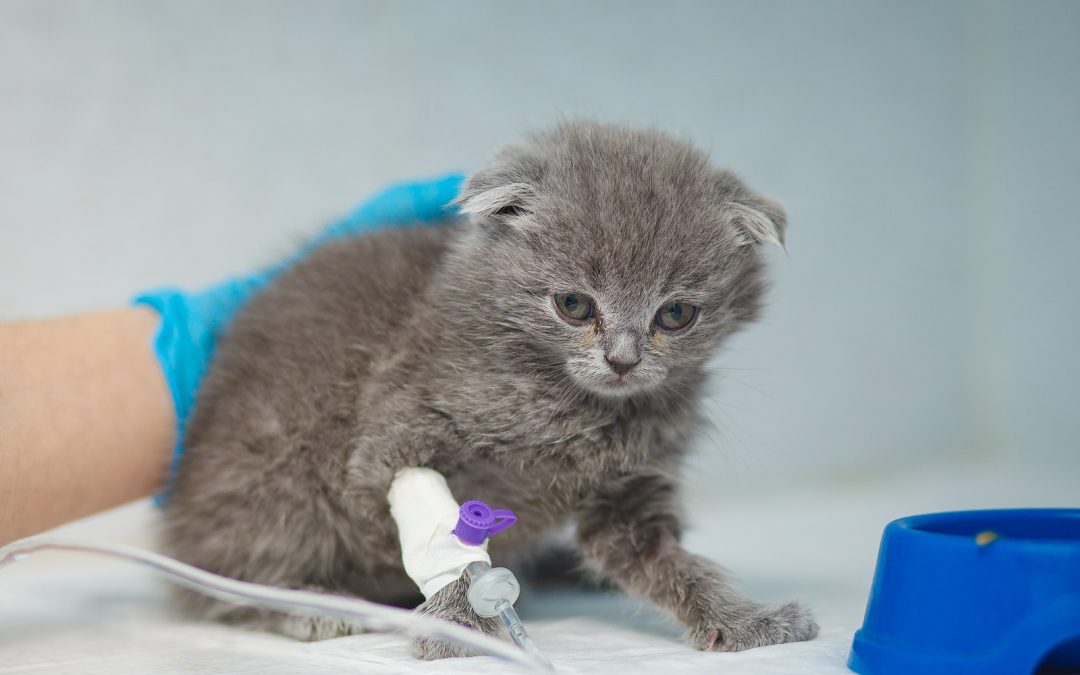
Blood transfusions aren’t just used in human medicine — they are also an important, life-saving tool in veterinary care. Transfusions may be needed when a pet experiences significant blood loss from trauma or surgery, or when certain diseases destroy or damage red blood cells faster than the body can replace them. In these cases, a transfusion can help restore oxygen-carrying capacity and stabilize the patient while the underlying condition is treated.
Blood Types in Dogs
Researchers have identified more than a dozen blood group systems in dogs, and additional types may still be discovered. These blood groups are genetically inherited, and dogs can have different combinations of them.
The DEA 1 (Dog Erythrocyte Antigen 1) system is the most clinically significant because it is most likely to trigger an immune reaction if incompatible blood is given.
Blood Typing & Crossmatching in Dogs
Before a transfusion, both the donor blood and the recipient’s blood are tested for compatibility. This process — called crossmatching — checks for antibodies that may attack the transfused cells.
Two types of testing may be performed:
- Blood typing — determines DEA 1 status (positive or negative)
- Crossmatching — mixes donor and recipient samples to detect a reaction
Giving incompatible blood can cause the recipient’s immune system to destroy the transfused cells, which may reduce the benefit of the transfusion and can lead to serious, sometimes life-threatening transfusion reactions.
Even though dogs typically do not have strong naturally occurring antibodies prior to their first transfusion, compatibility testing is strongly recommended — especially for dogs who have been previously transfused.
When Do Cats Need Blood Transfusions?
In cats, transfusions are most commonly given to treat moderate to severe anemia, which may be caused by:
- Blood loss (trauma, internal bleeding)
- Immune-mediated destruction of red blood cells (hemolysis)
- Bone marrow disease or ineffective red cell production
- Parasites, toxins, or infections
A key indicator used when deciding whether to transfuse is the hematocrit (HCT / PCV) level.
In many cases, a transfusion is recommended when:
- HCT drops below 10–15%, or
- the cat is showing concerning clinical signs (weakness, collapse, rapid breathing, shock)
Cats with chronic anemia may tolerate lower values better than cats with rapidly developing (acute) anemia, which is why the decision is based on both lab results and symptoms.
Blood Types in Cats
The most important feline blood group system is the AB system, which includes types:
- A
- B
- AB (rare)
This system is not related to the human ABO system.
Unlike dogs, cats have naturally occurring alloantibodies against the blood type they do not possess:
- Type B cats have strong anti-A antibodies
- Type A cats may have weaker anti-B antibodies
Because of this, incompatible transfusions in cats can cause severe — and sometimes fatal — reactions, even on the very first transfusion.
Possible reaction signs include:
- Tachycardia, tachypnea, restlessness
- Vomiting, salivation, diarrhea
- Lethargy or collapse
- Arrhythmias or breathing difficulty
- Hemoglobinemia / hemoglobinuria
For this reason, blood typing — and ideally crossmatching — is considered essential before any feline transfusion. If plasma is administered, it should also match the recipient’s blood type.
Sources: Veterinary Information Network, PetMD