
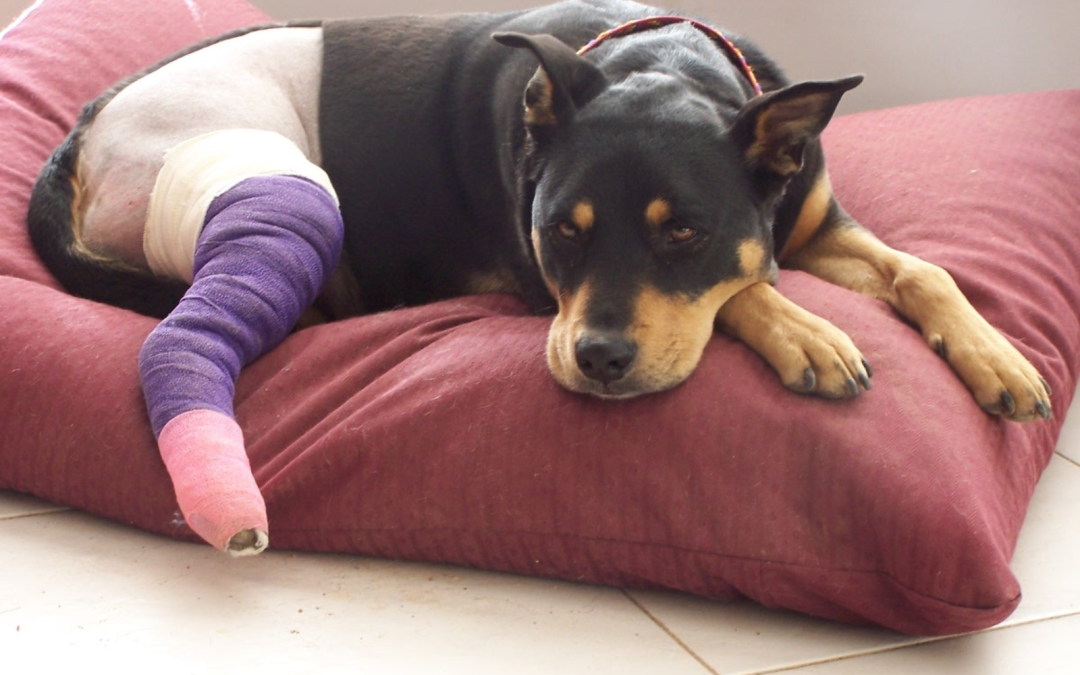
Every surgical procedure is followed by a carefully planned recovery process. Depending on your pet’s specific surgery, this plan may include activity restrictions, dietary changes, medications for pain or anxiety, confinement, or a combination of these measures. At discharge, your veterinarian provides detailed, individualized instructions designed to promote healing and long-term comfort.
Although many pets seem to feel better quickly, true healing takes time. Closely following your pet’s discharge instructions is one of the most important ways you can help ensure a safe, smooth, and successful recovery.
Exercise Restrictions
Activity limitations are essential to protect delicate surgical sites while the body heals. For surgeries involving bones, joints, or ligaments, controlled movement—or temporary confinement—is critical to allow repairs and implants to stabilize properly.
It’s common for pets to appear comfortable and eager to return to normal activities before healing is complete. While this progress is encouraging, it’s important to follow the timeline provided by your veterinarian and check with your surgical team before increasing activity. Too much movement too soon—including ending crate or bed rest early—can lead to setbacks such as re-injury, delayed healing, or implant failure. In some cases, this may result in the need for additional surgery and a longer recovery period.
Pain and Supportive Medications
Post-surgical medications—such as pain relievers, anti-inflammatories, and calming agents—play a crucial role in recovery. These medications are carefully chosen and dosed to keep your pet comfortable, reduce inflammation, and support safe healing.
Consistency is key. Stopping pain medications early because your pet seems comfortable can allow pain to resurface and become harder to manage. Similarly, sedatives or calming medications help limit over-excitement and sudden movements that could jeopardize healing. Discontinuing these too soon may increase anxiety or activity levels, raising the risk of complications.
If you have any questions about medications, activity, or your pet’s progress, please reach out to your veterinary team. Recovery is a partnership, and your role at home is vital.
Dietary Restrictions and Feeding Guidelines
Dietary instructions are especially important for pets recovering from gastrointestinal procedures, such as foreign body removal, intestinal surgery, or major colorectal surgery. The digestive tract needs time to heal, and even small deviations from feeding recommendations can cause setbacks.
Your veterinarian may prescribe a special gastrointestinal diet, smaller and more frequent meals, or a gradual transition back to regular food. Feeding treats, table scraps, or unapproved foods too soon can lead to vomiting, diarrhea, constipation, or stress on surgical sites. In severe cases, this can interfere with healing or require additional medical care.
If your pet has a reduced appetite, skips meals, or struggles to eat, do not make dietary changes without consulting your veterinary team. We’re happy to help adjust the plan in a way that supports healing and keeps your pet comfortable.
When to Call Us: Recovery Red Flags
Some mild discomfort or temporary behavior changes are normal after surgery, and your care team will review any procedure-specific concerns to watch for. In general, please contact us right away if you notice any of the following:
- Persistent vomiting or diarrhea
- Refusal to eat for more than 24 hours (or sooner for puppies, kittens, or small pets)
- Sudden lethargy, weakness, or collapse
- Excessive swelling, redness, discharge, or bleeding at the incision
- Incisions that are open, gaping, or have a foul odor
- Signs of significant pain, such as crying, restlessness, or inability to settle
- Sudden increase in activity, worsening anxiety, or inability to stay calm despite medication
- Straining to urinate or defecate, or lack of bowel movements for two or more days after gastrointestinal surgery
If you’re ever unsure whether a change is normal, it’s always best to call. Early intervention can prevent minor concerns from becoming serious complications.
Recovery is truly a team effort, and your attentiveness at home plays a critical role in your pet’s healing. Our team is here to support you every step of the way.